
Dr. James Ko's commitment to excellence shines through his achievements as a Doctor of Dental Surgery, paired with a Master's in Science, both earned from the esteemed University of Toronto. His research has delved into the realm of Biomaterials, leading to a published paper focusing on the interplay between dental implant surfaces and bone. Dr. Ko's patient-centred approach is exceptional, as he invests time in building strong connections with patients, alleviating their concerns, and offering practical strategies to enhance their dental well-being. Embracing a holistic approach, he caters to patients of diverse age groups.
Why Does My Tooth Hurt When I Bite Down or Chew?
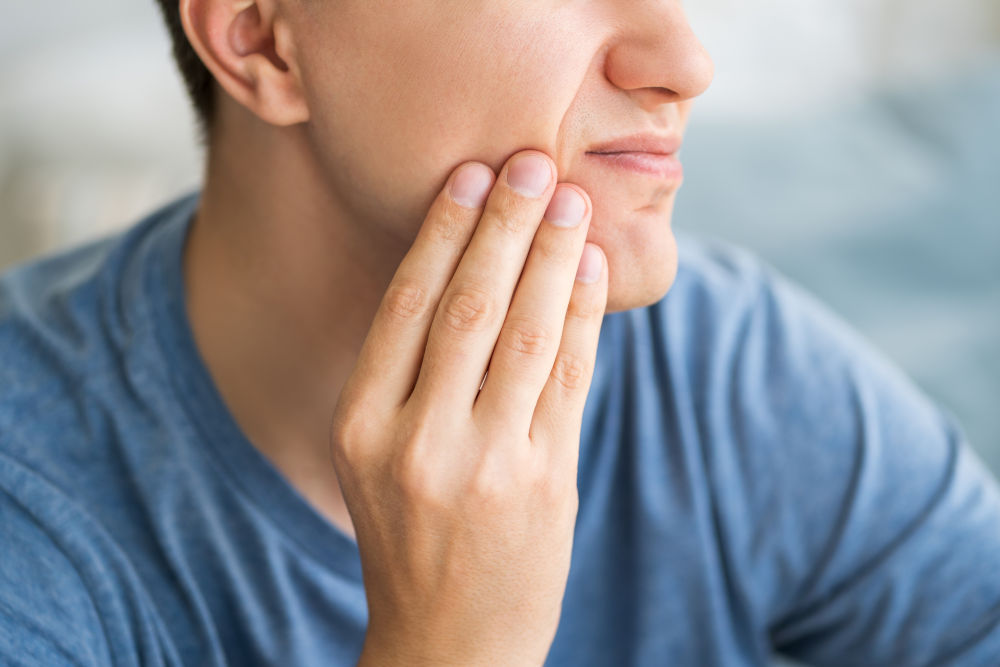
Tooth pain when you bite down can come from pressure on a crack, decay, an inflamed nerve, sore gum tissue, or a bite that hits one tooth harder than the rest. The pattern matters more than the drama of one meal. A sharp jab as you release the bite usually means the tooth is flexing. A dull ache that stays after you stop chewing usually means the nerve, or the ligament around the root, is already irritated.
Chewing is a short load test. Enamel takes the hit, dentin sits underneath, and the pulp in the centre holds the nerve and the blood supply. The periodontal ligament around the root works as a small shock absorber. When any of these parts is cracked, decayed, or swollen, even normal chewing pressure can trigger the nerve. That is why the tooth can feel normal at rest and complain only when you eat.
The ending depends on which part is injured. A small cavity can be repaired with a filling while the pulp is still healthy. A crack that flexes on a molar often needs full coverage so the walls stop moving. An infected pulp needs the damaged tissue removed. Gum inflammation and a filling that strikes first belong on the same list. Pain you can point to with one finger is a different problem from a vague ache across several upper teeth.
Key Takeaways
- Pain only when you bite is a diagnosis waiting to be made, even if the tooth looks fine in the mirror.
- Sharp pain as you release the bite points to a crack more often than to a simple cavity.
- A dull ache that lingers after chewing points to an irritated nerve or to the ligament around the root.
- Decay between teeth, or under an old filling, can hurt when you chew before you ever see a hole.
- Antibiotics do not settle pain from an inflamed pulp. The tooth needs a procedure.
- Once you are chewing on the other side, the problem is already changing how you eat.
Find our Dental Clinic Near You
Why does my tooth hurt when I bite down?
When you close, the tooth and the ligament around it take a brief, heavy load. An intact tooth does not report that load as pain. A crack that opens, decay that has reached dentin, or a swollen ligament turns the same load into a signal you cannot ignore.
Sharp pain, a dull ache, and pain that only shows up under pressure
Sensitivity and bite pain get grouped together because both show up at a meal. Sensitivity is a short response to cold, heat, or sweets, and it fades when the trigger is gone. It often affects more than one tooth and can track worn enamel or a receded gumline. Bite pain responds to force. It does not need ice water. It needs you to close on that tooth.
A zing that lasts a second and then vanishes is often dentin that is open to the mouth. Pain you can reproduce by biting in one spot is structural or inflammatory. The second kind tends to get deeper if you only switch sides and hope the tooth forgets. Write down whether the pain is sharp or dull, whether it hits one tooth, and whether cold makes it worse. That note shortens the exam.
Pain when you bite versus pain when you let go
Pain on the way down and pain on the way up are not the same event inside the tooth. When you bite, a crack can close, and the two sides of the tooth can sit together for a moment. When you release, the crack opens again, fluid inside the dentin shifts, and the nerve fires. People often say the tooth felt acceptable while they were biting and then hurt sharply as they let go. That release pain is a classic cracked-tooth pattern.
A throb that builds after you have finished the meal is a different pattern. The ligament is inflamed, or the pulp is angry, and chewing pressure was only the trigger. Infection at the end of the root often feels as if the tooth is too high, even when nobody has adjusted it. You bite, it hurts, and it keeps hurting. That is the tooth to have seen before the cheek swells.
"Pain on biting is a pattern, not a mystery. Sharp pain when you release the bite usually means a crack. A dull ache that lingers usually means the nerve or the ligament is inflamed. That difference is what we test first," says Dr. James C.H. Ko, DDS, Markham Smile Centre .
Tooth pain when biting down, caused by cause
Tooth pain when biting down is a shared symptom, not a shared disease. The visit sorts the cause with tests you cannot do in a bathroom mirror: a bite test on individual cusps, a cold test, a look under magnification, and an X-ray for decay between the teeth or a shadow at the root. Two people can use the same words and need different treatment.
| Cause | What the bite feels like | Usual next step |
|---|---|---|
| Crack | Sharp pain on biting or on release | Cover the tooth, so it stops flexing |
| Decay | A zing that becomes a steadier ache | Filling, or care of the pulp if it is involved |
| High filling or crown | One tooth, soon after dental work | Adjust the bite |
| Gum disease | Sore or loose, sometimes several teeth | Clean the root surface and calm the gums |
| Abscess | Throb, swelling, pain when the tooth is touched | Drain the infection and treat the tooth |
| Grinding | Morning jaw ache, then pain at meals | A guard, plus repair of worn or cracked teeth |
Decay you cannot see in a mirror
Decay starts in enamel and moves into dentin, which is softer and full of tiny tubes that lead toward the nerve. Early decay is often silent. Once the cavity is deep enough, chewing pressure pushes fluid into those tubes, and the nerve responds. The pain tends to become more regular, not more random. Sweets and cold join the picture. A hole you can see is a late sign, not the first one.
A white filling
If the decay has already reached the pulp, a filling placed over an inflamed nerve won't control the pain. The cold test and the X-ray decide that. Decay between two back teeth is the version people miss, because the cheek side of the tooth still looks whole. Shredded floss, a bad taste in one spot, or food that always packs in the same gap are the household clues.
A filling or crown that hits first
A tooth that was comfortable and then hurts on biting in the days after a new filling or crown is often simply high. The restoration meets the opposing tooth before the rest of the arch does, so one ligament takes the whole meal. The fix is usually a small adjustment once the dentist confirms there is no crack and no nerve problem underneath.
Gum soreness that feels like the tooth
The ligament and the gum can hurt under load even when the enamel is intact. Gingivitis is often painless, which is why people ignore bleeding on brushing for a long time. Once inflammation moves deeper, the tooth can feel sore to chew on, and in later disease it can feel loose. Several teeth aching the same way, with bleeding or a bad taste, points more to the gums than to one cracked cusp.
Non-surgical gum therapy
Home brushing does not reach tartar that has already formed under the gumline. If the tooth also looks dark on an X-ray at the root tip, the gums are not the whole story, and the nerve needs to be checked in the same visit. A loose tooth plus a bad taste is a reason to be seen promptly. Waiting for it to tighten on its own is how you lose support around the root.
Cracked tooth pain that comes and goes
Cracked tooth pain is easy to dismiss because it comes and goes. You avoid one side, the jab disappears, and you decide it was a seed. The crack is still there. Chewing force, especially on a back tooth, keeps working the split. A crack that starts in a cusp can stop in dentin, reach the pulp, or run down the root. Each depth has a different outcome, which is why pain that only shows up sometimes isn't a reason to wait a season.
You will often notice a cluster of signs rather than one dramatic break. None of them, on their own, proves the depth of the crack. Together they are a reason to stop testing the tooth with hard food.
- Sharp pain on one tooth when you bite a certain way
- Pain that is worse as you release, not as you close
- Cold that has become sharper than it used to be on that tooth
- Trouble pointing to the tooth, because the crack only opens at one angle
- A history of grinding, a large old filling, or a bite on something hard
A porcelain crown
Bonding or a filling can be enough for a small chip that does not flex through the tooth. A crack that has already reached the pulp needs the nerve treated as well, or the coverage will sit on a tooth that still throbs. Some cracks split the root below the gum. Those teeth cannot be held together predictably, and removal is the honest plan.
The mirror will not tell you which crack you have. A bite test on each cusp, light passed through the tooth, and an X-ray help sort that out. A normal X-ray does not clear the tooth if the pain persists.
Why does my tooth hurt when I chew if the tooth looks fine?
Why does my tooth hurt when I chew often follows a look in the mirror that shows nothing. Decay between teeth, a hairline crack, and a slightly high bite can all be hidden. Pain with a normal-looking tooth is a reason to be examined.
Hidden decay and old dental work
The most common hidden cavity sits between two teeth, or under the edge of a filling that has leaked. Food packs in, the area aches when you chew, and floss may shred. An X-ray sees that spot. The tooth can look perfect from the cheek side while the contact is soft. If an old filling cracks, the tooth under it may crack too. Replacing the filling without asking why it broke is how the same pain returns in a month.
A bite that overloads one tooth
Teeth are meant to share a meal. If one tooth hits early because of a new restoration, a shifted tooth, or wear on the neighbours, that ligament takes work it wasn't assigned. The pain is local. It can feel like a bruise. It can spread into the jaw muscle on that side by evening. A thin paper tab between the teeth shows the high spot in the chair. Filing that spot at home is a good way to make a second tooth high.
Upper teeth and a sinus ache
An upper molar can ache when the sinus above it is congested. That ache often hits more than one tooth. It may worsen when you bend forward. Biting one cusp does not reliably set it off. Dental bite pain is the opposite pattern: one tooth, one angle, reproducible with a bite test. Both can exist in the same week of a cold.
Why a back tooth hurts when you chew
Back teeth do the grinding. Molars and premolars have broad surfaces and steep cusps, and they take the heaviest share of chewing. A crack, a deep groove full of decay, or a worn filling shows up there first because that is where the force is. Pain in a front tooth when biting is more often a chip, an edge-to-edge bite, or a recent knock. Pain in a back tooth when chewing is more often a splitting cusp or an overloaded ligament.
A wisdom tooth that is only partly through the gum can cause dull pressure at the very back, especially if food packs under the gum flap. That pain can spread into the molar in front of it. A swollen flap needs its own look, separate from a crack in the molar.
Large fillings in molars often set up cracks. As the filling gets wider, the tooth walls get thinner, and a cusp flexes every time you chew. That flex is the sharp, on-and-off pain. Covering the cusp stops the flex. Leaving it means the crack has a path toward the nerve. If you already know a back tooth has a wide silver or white filling , and biting has become selective, mention the filling. Age of the restoration is a clue, not a verdict.
Grinding and clenching that show up at meals
You are not chewing in your sleep, so grinding feels like an odd explanation for mealtime pain. The damage happens overnight, or during a long day of clenching, and you notice it at mealtime. Grinding wears enamel, starts small cracks, and inflames the ligament. The tooth then objects to a normal bite because it has already been loaded for hours.
The signs sit beside the tooth pain. A stiff jaw on waking, headaches at the temples, flat shiny edges on the teeth, and a partner who hears grinding are the usual set. One sore tooth plus that set is a grinding story until the exam says otherwise. One sore tooth and pain that releases with a quiet jaw is still a crack story until a bite test clears it. The two often travel together, because the grinding is what started the crack.
A custom guard spreads the night load and stops enamel grinding directly on enamel. It does not heal a crack that is already in the dentin, and it does not treat an infected pulp. The sensible order is to find out what the tooth needs, then protect the repair. A soft guard from a pharmacy can change which tooth hits first. If you wake with a new sore tooth after starting one, have the bite checked rather than clamping down harder on the habit.
What to do the day biting starts to hurt
Tooth pain when biting has a same-day routine, and it is short. The goal is to stop making a crack or bruise worse and to gather the details a dentist will ask for. Home steps don't close a crack, and they don't remove decay. They keep you safer the next day while you arrange a checkup.
- Chew on the other side, and skip ice, hard crusts, and sticky sweets on the sore tooth.
- Rinse with warm salt water if the gum around the tooth is sore or food is packed there.
- If the cheek is swollen, use cold on the outside of the face and keep heat off the jaw.
- Write down the pattern: which tooth, whether it hurts on biting or on release, whether it's worse with cold or after meals, and whether your face is swelling.
- Arrange an exam if the pain lasts more than a few days, gets worse, or you see swelling, pus, or a fever.
An ice pack on the outside of your cheek
Pain that lasts more than a few days, or that is clearly worse than yesterday, needs a dentist rather than another day of soft food. Swelling, pus, or a fever means you need to go the same day. Trouble breathing or swallowing is an emergency. It is not a tooth to park until the next routine opening on the calendar.
A few moves make the tooth worse while you wait. They are worth naming because they are the ones people try first.
- Chewing nuts, ice, or hard candy on the sore side drives a crack deeper.
- Starting leftover antibiotics won't remove an inflamed pulp or drain an infected pocket.
- Filing the tooth at home, or gluing a cracked cusp, changes the bite and hides what the dentist needs to see.
- Testing the tooth on purpose, bite after bite, to "see if it is still there" is how a small crack gets longer.
How a dentist finds the tooth that only hurts on biting
The visit starts with the story, because the tests are chosen from it. Expect questions about when the pain started, whether release is worse than closure, whether cold lingers, whether the tooth was filled or crowned, and whether you grind or recently bit something hard. A vague "it hurts when I eat" is harder to test than "the lower right molar hurts when I let go of a crust."
The exam then tries to reproduce the pain on purpose, in a controlled way. The dentist places a small plastic tool or a cotton roll on one cusp at a time. If one cusp hurts on release and the others do not, the crack has a location. The dentist applies cold to see how the nerve responds. The gum is pressed to see whether the ligament is the sore part. Light can show a crack that the eye missed under ordinary room lighting.
X-rays come next, and they answer different questions. They show decay between teeth, deep decay under a filling, and a dark area at the end of a root. They often do not show a hairline crack in the tooth crown. A clear film plus classic release pain still means the crack is in play. If the pain cannot be reproduced that day, the dentist may ask you back when it is active, or watch a suspicious cusp, rather than cut a healthy tooth on a guess.
How the cause changes the treatment
Treatment follows the cause, so two people with the same complaint can leave with different plans. A high filling is adjusted. Decay that stops in dentin is filled. A flexing crack is covered. If the pulp is inflamed or infected, we remove it, or we remove the tooth. We clean and maintain gum disease. Grinding is managed so the repair doesn't break next time. None of those plans is "take something and see."
For the intense pain of an inflamed pulp, antibiotics do not relieve the pain
Root canal treatment
A localized swelling at the root still needs the tooth treated and the area drained. Antibiotics are considered when the infection is spreading, there is a fever, or a person's health makes a spreading infection more dangerous. In those situations, they are added to dental treatment. They do not replace it. A prescription without an exam leaves the source in place.
Pain on biting does not mean the tooth is finished. Many cracked teeth, and many teeth with deep decay, are kept once the crack is covered, or the pulp is treated. Removal comes into view when the crack runs down the root, the tooth has split, or so little structure remains that a crown would have nothing sound to hold. That call is made from the exam and the images, not from how much lunch hurt.
"A crack that only hurts when you chew can still run deep. If the tooth can be held together, we protect it. If the crack has split the root, or the tooth is too broken to restore, removal is the honest option," says Dr. Amir Guorgui, BSC, DMD, MACSD, Markham Smile Centre .
Biting pain after a filling, crown, or root canal
A tooth can still feel pressure for a few days after a deep filling, a crown, or root canal treatment . The ligament has been irritated, and chewing on that side too soon keeps poking it. Soft food and a bite check before you leave prevent most of that soreness. Pain that climbs after day two, or a bite that feels clearly high, is a reason to call rather than to endure the week.
A new crown that hurts only when you close is often a high spot, and adjusting it is straightforward. A tooth that hurts on release after the crown is cemented needs a second look at whether a crack is still flexing under the coverage, or whether the bite on one cusp is heavy. Root canal treatment that leaves a throb on biting needs the same honesty: the canal may need review, the bite may be high, or a root crack may be the limit of what the tooth can do.
Habits that keep the next bite from hurting
Prevention is a set of habits, not a single product. The aim is to catch decay and cracks before chewing becomes the alarm, and to stop overloading one tooth until it fails at dinner. None of these steps treats a tooth that already hurts when you bite. They lower the chance of the next one.
- Daily cleaning . Brush with a fluoride toothpaste and clean between the teeth, where the cavities you cannot see tend to start.
- A regular exam . Small cracks and early decay are easier to treat before the pulp is involved and the visit gets longer.
- Food and tools . Don't chew ice, popcorn kernels, or pens, and don't open packets with your teeth.
- The jaw story . Report morning stiffness, flat edges on the teeth, or a headache on waking so we can plan a guard before the next cusp cracks.
A teeth cleaning
Cleaning does not fix a crack that is already flexing, and it does not replace the exam when one tooth hurts on biting. It does keep the gums from adding a second source of pain. If you grind, ask about a guard at the same visit, so you plan the repair and the protection together rather than as two unrelated errands.
The pattern of the pain decides how soon to book
Bite pain is a load test you did not schedule. The tooth that hurts when you close, or when you let go, reports which structure is failing: a flexing crack, decay moving inward, a bruised or infected ligament, gums that are no longer quiet, or a bite that dumps the meal onto one tooth. The pattern you notice at home starts the diagnosis. The tests in the chair finish it.
Sharp release pain, a deepening ache, swelling, or a side of the mouth you have started to avoid are reasons to be seen. Early repairs stay smaller. A crack covered before it reaches the pulp is a different appointment than a tooth that has already split. A high filling adjusted this week doesn't have to become a bruised ligament next month.
Frequently Asked Questions
How do I stop my tooth from hurting when I bite down?
Chew on the other side, skip hard food on that tooth, and use a cold pack on the cheek if it is swollen. Those steps make the day easier. They do not close a crack or remove decay. If the pain lasts more than a few days, gets worse, or the gum swells, you need to treat the cause.
Why does only one tooth hurt when I bite down?
One tooth usually means a local problem: a crack, a deep cavity, a high filling, or a bruised or infected ligament. Pain in several teeth at once is more often due to gums, grinding, or a sinus ache in the upper jaw. A bite test finds the cusp when you cannot tell which tooth it is.
How can I tell if the tooth is infected?
Infection often brings a throb, pain when the tooth is touched, swelling, a bad taste, or a fever. The tooth may feel too high. A cold test and an X-ray show whether the pulp has died or a shadow sits at the root. Swelling with fever needs a same-day visit.
Why does my tooth hurt when I put pressure on it?
Pressure loads the ligament and any crack in the tooth. A bruised ligament, a crack, decay near the nerve, or an abscess at the root can all respond to that load with pain. Whether the pain is sharp on release or a lingering ache helps guide the exam.
Why does my tooth hurt more when I let go?
A crack can close while you bite and open again as you release. That movement irritates the nerve and causes a sharp jab. Have the tooth examined while the crack may still be small enough to cover. Waiting for the jab to become constant gives the split more time to deepen.
Can tooth pain when chewing go away on its own?
The jab can disappear for days if you avoid that side. The crack, the cavity, or the inflamed ligament is still there, and chewing force keeps working on it. A quiet spell is not the same as healing. If the same tooth repeats the pain, it needs an exam.
Why does my back tooth hurt when I bite down?
Molars take the heaviest chewing load, so cracks, deep decay, and worn fillings show up there first. A partly erupted wisdom tooth can add dull pressure at the very back when food packs under the gum. The exam distinguishes a splitting cusp from gum soreness around a wisdom tooth.
Does pain when biting mean the tooth has to come out?
Removal is one option, not the default. Many teeth are saved with a filling, a crown, gum treatment, or root canal treatment. A tooth comes out when a crack splits the root or too little sound tooth remains to restore it predictably.


See what our patients are saying:
Everyone here is very friendly and provides excellent care. I received a full exam on my first visit, and everyone took time to answer my questions and ensured I felt comfortable the entire time - exactly what you want when visiting the dentist. I highly recommend Markham Smile Centre for anyone looking for great dental care.

There is an ample parking space before you get into the office. The receptionists welcome us friendly with proper COVID-19 procedures in place. The staff worked with patient very patiently and professionally. My teeth cleaning was done by Ying, she explained every detail to me and I did not feel any pain or uncomfortable at all. Thanks to the best team !
It's been a while since I've been to a dentist but I'm trying to get back on track with health in general. Overall it was great going to Markham Smile Centre! The receptionist (I believe she was Kim) was friendly. The hygienist, Ying, was attentive and gentle during the cleaning; x-ray tech (forgot her name, sorry!) was great too. Dr. Sara Riad explained things with good detail. Looking forward to going back!
I was someone who was nervous and anxious about visiting the dentist, but the team at Markham Smile Centre has made me feel SO comfortable. Kim is so patient and helpful and Dr. Hwang and Rory are both so professional and wonderful. They thoroughly explain the procedure to make you comfortable beforehand and are very gentle. I now look forward to visiting the dentist!
I found this place on a whim when I was looking for a new dentist in Markham. My hygienist ying was super nice and her cleaning was very gentle yet thorough. I saw Dr.Jason and he was very nice and informative in regards to what needs to be done and provided me with all the information I needed to make a choice. Would recommend this place to anyone looking for a new dentist, they’re accepting new patients!!
I have been to many dentists in my life, Dr. Jason is easily the best dentist I have ever been too. He does everything he can to make you comfortable no matter the procedure and is a true professional, as does all the staff at Markham Smile Centre. Truly an amazing dentistry
The clinic was clean and the staff was very polite. I particularly liked the fact that everything was explained to me before going in for the procedure so I knew what to expect at each step. The dental hygienist who did the cleaning for me was also very gentle and took my concerns into consideration. I will definitely recommend them.
Upon arriving to the Markham Smile Centre, my son and I were greeted with a warm welcome by the receptionists. The hygienists and Dentist were very gentle and transparent with what they were doing. The hygienist that worked on my 9 year old son was patient and very friendly with him, which helped ease his nerves. Our overall experience was A+.
Since I was little, I have always hated going to the dentist... Its always uncomfortable and unpleasant. These days, visiting the dentist isn’t so bad! Dr Jason, Rory, and the lovely staff at reception make the experience 100x better. I have had absolutely no issues with the gum graft and cleanings that I’ve gotten done here. Everyone is incredibly friendly and helpful, even when I’m calling in or emailing a hundred questions :). I would highly recommend Markham Smile Centre.
Love this place! All the staffs are friendly and Professional and I mean all, cause I've been to most of their office, Markham , Stouffville, North York, and Maple. Dr. Ko is very professional and patient. Whenever I have questions and concerns he would always reply me . I would say this this dental office take care of you all the way. I would highly recommend everyone to come here for any dental works. =)


